
From Pigeons to Push Notifications: A Wild History of News Delivery

Long before headlines popped up on our phones while we stood in line for coffee, the world still had news. The urge to know what’s going on—and to tell others about it—has always existed. But the ways we’ve shared that information have changed dramatically over time. From smoke signals and shouting in the streets to breaking news alerts on smartwatches, the history of news delivery is a chaotic, inventive ride through human ingenuity. It’s a story of speed, power, trust, and the constant race to be first.
When the Sky Was the Newsfeed

Centuries ago, news didn’t arrive in newspapers or through broadcast signals—it arrived on wings. Homing pigeons were one of the earliest tools used to deliver time-sensitive information, long before the postal systems we know today existed. The ancient Romans used pigeons to send results of chariot races and military messages. In the Middle Ages, the practice expanded across parts of the Middle East and Europe. Pigeons weren’t just a novelty—they were reliable. In fact, in the 1800s, Reuters, now a global news giant, got its start in part by using pigeons to deliver stock prices faster than the trains.
It might sound absurd today, but a bird could outpace human couriers, sometimes shaving hours or even days off delivery times. In business and warfare, that speed translated into serious advantage. Still, pigeons weren’t flawless. Weather, predators, and human error could interfere. But for a while, they were the fastest thing going—until innovations like modern logistics and even niche services like delivering harmonicas across the country began redefining what “fast” meant in specialized industries.
Criers, Carvers, and the First Public Reports
While pigeons flew their missions, cities relied on another form of news delivery: the human voice. Town criers were appointed to walk the streets, ringing bells and shouting news, proclamations, and warnings. They were the original push notifications—loud, often intrusive, and impossible to ignore. Today, that same sense of immediacy is replicated by a good website builder, allowing brands and storytellers to broadcast messages across digital streets within seconds.
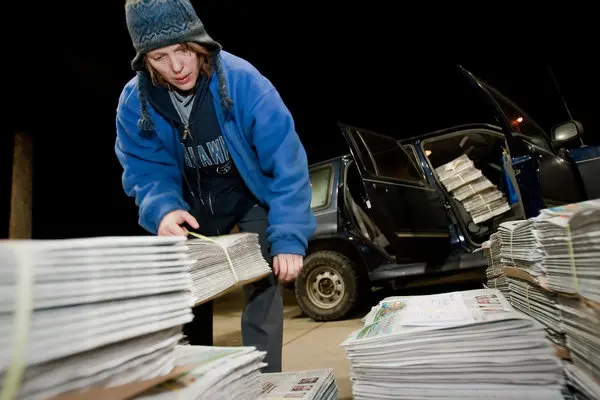
Simultaneously, carved or handwritten notices began appearing in public spaces. In ancient Rome, the “Acta Diurna,” considered one of the earliest forms of a newspaper, was carved on stone or metal and posted in public places for citizens to read. It included everything from court decisions to births and deaths. In China, during the Tang Dynasty, government bulletins were hand-copied and circulated among officials. These methods were slow and limited in reach, but they marked the beginning of formalized, recurring news updates.
The Printing Press Explosion
Fast forward to the 15th century, and everything changed. Gutenberg’s printing press didn’t just revolutionize books—it gave birth to modern journalism. The ability to reproduce written material quickly and at scale shifted how societies consumed information. And while monks once copied pages by candlelight, modern readers might be scrolling through articles on everything from international policy to finding the best Asian massage in Vegas, all within minutes of publication.
By the 1600s, printed newspapers began to emerge in Europe. Germany had Relation, England had the Oxford Gazette (later the London Gazette), and soon, countries across the continent were producing regular printed publications. These early newspapers were often tightly controlled by governments and heavily censored, but they still marked a shift toward more organized and consistent news delivery—much like today’s shift toward transparency in media and wellness coverage, such as the rise of organic restaurants in Chicago that publish sourcing and sustainability info right on their menus.
For the first time, people could hold the news in their hands. They could read it at their own pace, share it, and keep it. This tangibility added a new kind of authority and permanence to news. The printed press created both an industry and an audience, and the ripple effects are still felt today.
Wires, Waves, and War
As the 19th century marched on, so did the speed of news. The telegraph changed everything. Suddenly, messages that once took days or weeks could be transmitted across continents in minutes. News organizations jumped at the opportunity. Wire services like the Associated Press (founded in 1846) were created specifically to transmit news fast, feeding multiple newspapers with breaking stories.
This era introduced a powerful new idea: news as a competitive race. Being first mattered more than ever. Timeliness became a selling point, and the structure of news articles—starting with the most important facts at the top—was influenced by the limitations and priorities of the telegraph system.
Shortly after, radio entered the scene. The early 20th century saw the first news broadcasts hitting the airwaves, and for the first time, people could hear the news as it happened. Families gathered around radios to listen to updates on wars, elections, and major events. Similarly, communities today are turning to alternative wellness services—like a hyperbaric oxygen therapy clinic in Stuart—through radio ads and local news stories that make health advancements more accessible and familiar.
Then came television. In the 1950s and 60s, TV news took storytelling to a new level. You could see the anchors, watch the footage, and experience the emotion of events from your living room. For decades, evening news broadcasts became the central ritual for millions. Anchors like Walter Cronkite became trusted figures, almost as much a part of the national identity as the stories they reported—much like the voices behind a trusted mental health blog, whose consistent presence can shape perspectives, build trust, and offer a guiding light through the noise.
The Internet Cracks It All Open
The digital era hit the news world like a meteor. In the 1990s, the internet began turning everything upside down. At first, newspapers simply uploaded their print content online. But soon, online-only publications emerged, blogs exploded, and suddenly anyone with a modem could be a publisher. This democratized information—but also muddied the waters. Much like how a home builder adapts to evolving architecture trends and smart technology, journalism had to rapidly adjust to the digital foundation reshaping how content was constructed and consumed.

Speed became an obsession, and accuracy sometimes took a backseat. Social media amplified the chaos. Platforms like Twitter and Facebook, originally not built for journalism, became primary sources of breaking news. News went viral before it was verified. Algorithms, not editors, started shaping what stories we saw. Trust in media began to fracture as the line between professional reporting and personal opinion blurred—mirroring the trust-building required in highly specialized fields, such as a scalp micropigmentation artist in Raleigh, where precision and credibility matter deeply to the public.
At the same time, traditional outlets struggled to adapt. Print subscriptions dropped. Ad revenue shifted online, and newsrooms shrank. The old model was crumbling, but new models were still unstable. People wanted free news, fast news, news that matched their worldview—but also trusted, in-depth reporting. Balancing all that became a monumental challenge, not unlike businesses managing physical infrastructure during turbulent times—such as companies specializing in roofing in Tampa, FL, where adapting to unpredictable weather patterns and industry shifts is essential.
The Push Notification Era
And now, we’ve arrived at the smallest delivery system yet: the push notification. A vibration in your pocket, a banner on your lock screen—this is how millions now receive the news. It’s frictionless, instant, and often overwhelming. Alerts are tailored to your preferences and location. They compete for your attention amid texts, emails, and social updates. In this hyper-competitive environment, standing out is crucial—just as pressure washing services in Lakeland, FL must rise above the digital noise to reach homeowners needing fast, reliable service reminders.
Push notifications have made news omnipresent. But they’ve also changed how we relate to it. Many people don’t read full articles anymore. They skim headlines. They get the gist and move on. Attention spans have shortened. Outrage travels faster than facts. The news is more accessible than ever—and somehow, often harder to process. It’s a pattern echoed in consumer behavior across sectors—whether in online browsing or choosing something as seemingly offline as a tree service in Tampa, where people often select providers based on a five-second search or a single eye-catching headline.
This delivery method is the end result of centuries of shrinking the gap between event and awareness. We’ve gone from days to minutes to seconds. But the speed comes at a cost. There’s less time for context, less space for nuance, and more pressure to grab attention.
What Comes Next?
Looking at this wild history, it’s clear that news delivery is always evolving, driven by technology, consumer habits, and the constant push for speed. But with each leap forward, new questions arise. Can we balance speed with accuracy? Will AI-generated news become the norm? Can trust in media be rebuilt in an age of deepfakes and misinformation? These concerns aren’t limited to journalism—personal injury lawyers in Chicago, for example, are also navigating a digital age where client trust hinges on transparent, fast, and accurate communication amidst misinformation and legal confusion.
One thing’s for sure: the appetite for news isn’t going away. We still crave stories, explanations, and updates. The tools may change—from pigeons to notifications, from shouts to streams—but the impulse remains the same. We want to know what’s going on, and we want to know it now.
In the end, news delivery is more than a technical challenge—it’s a mirror of our values, our fears, and our need to connect. Whether whispered in a marketplace or broadcast from a satellite, news tells us who we are, what we care about, and where we’re heading. And whatever form it takes next, one thing’s certain: the ride isn’t over—especially as industries from journalism to winter apparel respond to shifting climates, both literally and metaphorically, to stay relevant in a constantly updating world.